
Leading Research on the Reserve: A Q&A with Silk Grass Nature Reserve Executive Director Johnathan Canton
Silk Grass Farms is thrilled to welcome Dr. Johnathan Canton as Executive Director of the Silk Grass Nature Reserve. Born and raised in Belize, Johnathan has a Ph.D. in microbiology from the University of Florida and, prior to joining Silk Grass Farms, spent five years as a faculty member at the University of Calgary. Passionate about regenerative agriculture, Johnathan and his wife run an organic farm called Kunahmul, which means “love nest” in Mayan, on land in Belize that has been in Johnathan’s family for three generations.
We are excited to add Johnathan’s expertise and passion to the team at Silk Grass Farms. He will lead an array of research projects at Silk Grass Nature Reserve, such as identifying the genealogy of our recently discovered Belizean wild cacao, exploring the impacts of regenerative agriculture practices on soil microdiversity, and collaborating with our research partners, including Audubon and Stroud Water Research Center.
In this Q&A, Johnathan shares what makes his role at Silk Grass a perfect fit, the first projects he plans to launch at the Reserve, and the long-term vision for the interrelated goals with the Farms.
Can you share a bit about your background? What drew you to this role at Silk Grass Farms?
I'm proud to be Belizean born and raised. I grew up on a farm in northern Belize, and my dad is an agricultural engineer, so I've always had an interest in biology. After earning a Ph.D. in microbiology from the University of Florida, I served as a faculty member at the University of Calgary for five years, focusing on microbiology and cell science.
Many of us who come from developing countries feel an underlying guilt about “brain drain” when we're away. It's at the forefront of our thoughts—we went away, but we would prefer to be back home contributing to the development of our countries. The challenge is that we often can't find job opportunities in the areas we’ve trained in. So over the years, I've been hoping to find an opportunity to come home.
My wife and I are both passionate about food politics and farming. A few years ago, we took a two-year hiatus and came back to Belize to set up our organic farm here. It was so inspiring and felt so aligned with what is close to our hearts that after we left Belize, we kept saying, ‘We wish we were farming.’
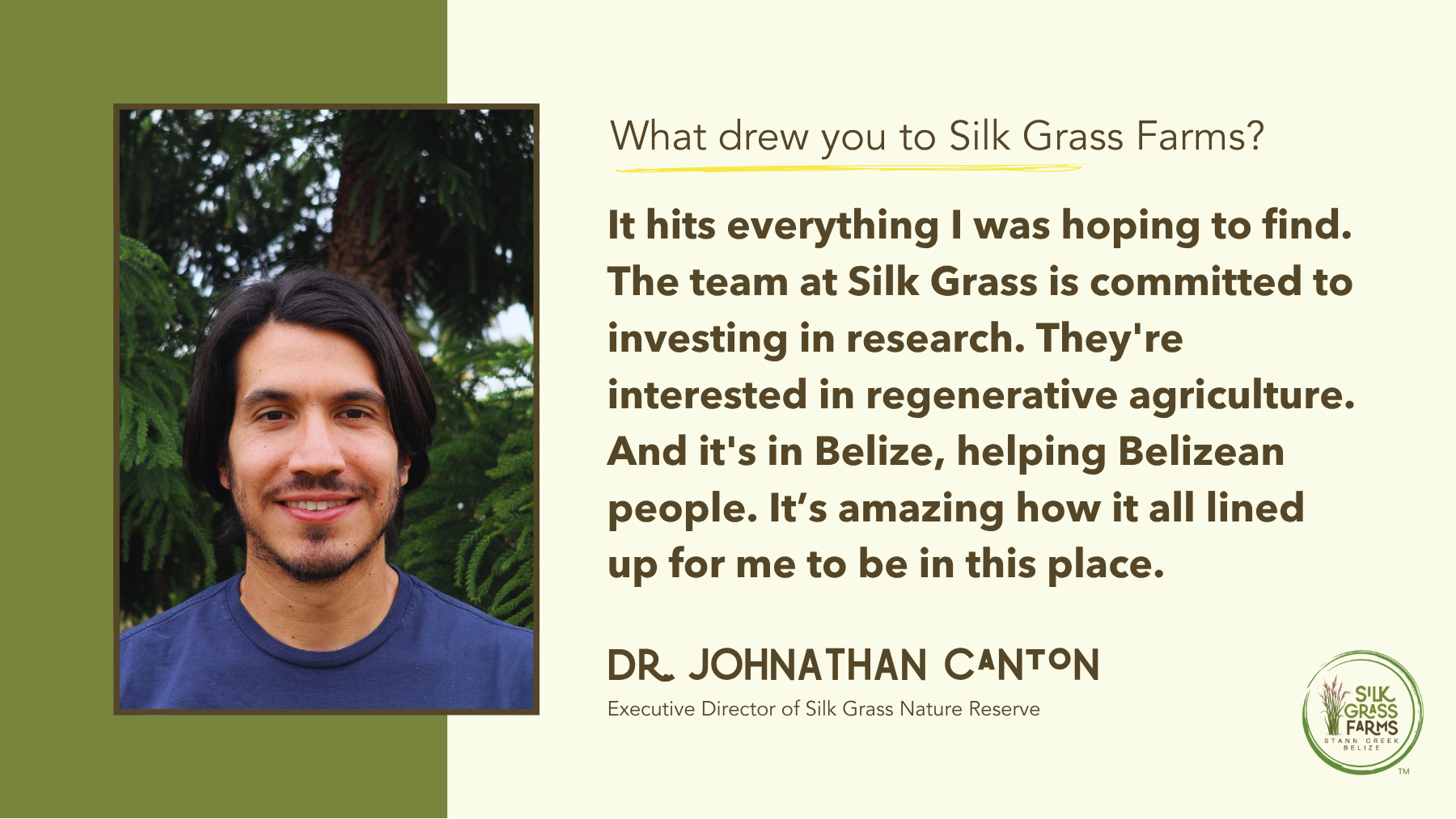
In 2024, a research paper I published attracted significant attention. It reached a prominent Belizean news channel called Seven News, and they interviewed me about it. Silk Grass Farms heard the interview and invited me down. When I saw everything happening here, and they asked if I’d like to join, it was an easy yes. It hits everything I was hoping to find. The team at Silk Grass is committed to investing in research. They're interested in regenerative agriculture. And it's in Belize, helping Belizean people. It’s amazing how it all lined up for me to be in this place.

What do you find uniquely interesting or beneficial about what Silk Grass Farms is doing in Belize?
For many years, Belize has had a large portion of its land designated as a reserve. That’s a great thing, but over the years, population growth and opportunities for large-scale agricultural exports, such as sugar and bananas, have put significant pressure on those reserves. Silk Grass is unique in that it’s modeling a way for business and conservation to work hand in hand. As far as I know, it's the only agricultural enterprise in Belize that reinvests all of its profits into nature conservation.
I believe the independent funding model Silk Grass has developed, with profits from the Farms supporting our research at the Nature Reserve, is critical to our ability to succeed. Securing international funding is a huge challenge here, and funding hurdles often stop projects in their tracks. This self-sustaining model positions us to conduct research that is less constrained by the requirements of international agency grants. With that freedom, a researcher like me can come in and say, ‘Okay, what are the crucial projects for this specific place?’
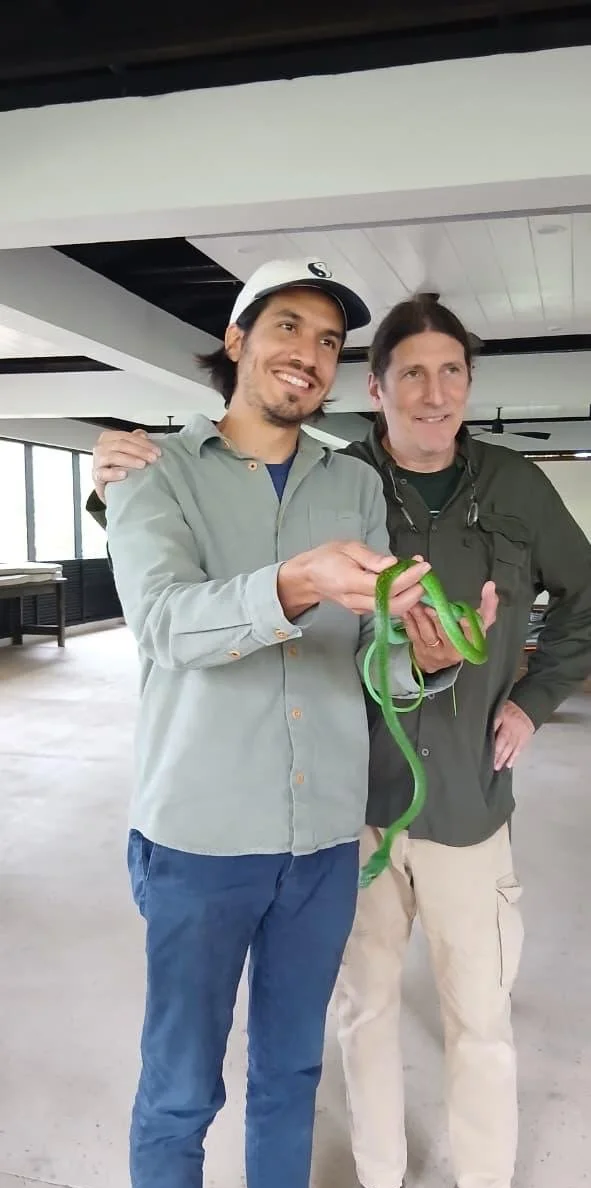
Jonathan and Jacob Marlin, BFREE Executive Director and herpetologist, led a training for the Nature Reserve rangers.
For me, the projects we pursue need to fulfill three criteria: First, they must have cultural value, something important in the context of Belize. Second, they must have biological value, something important in the context of nature. And third, because we're so interconnected with the farm, they need to have economic value. That framework allows us to narrow the sorts of projects we want to do.
What project are you excited to work on first?
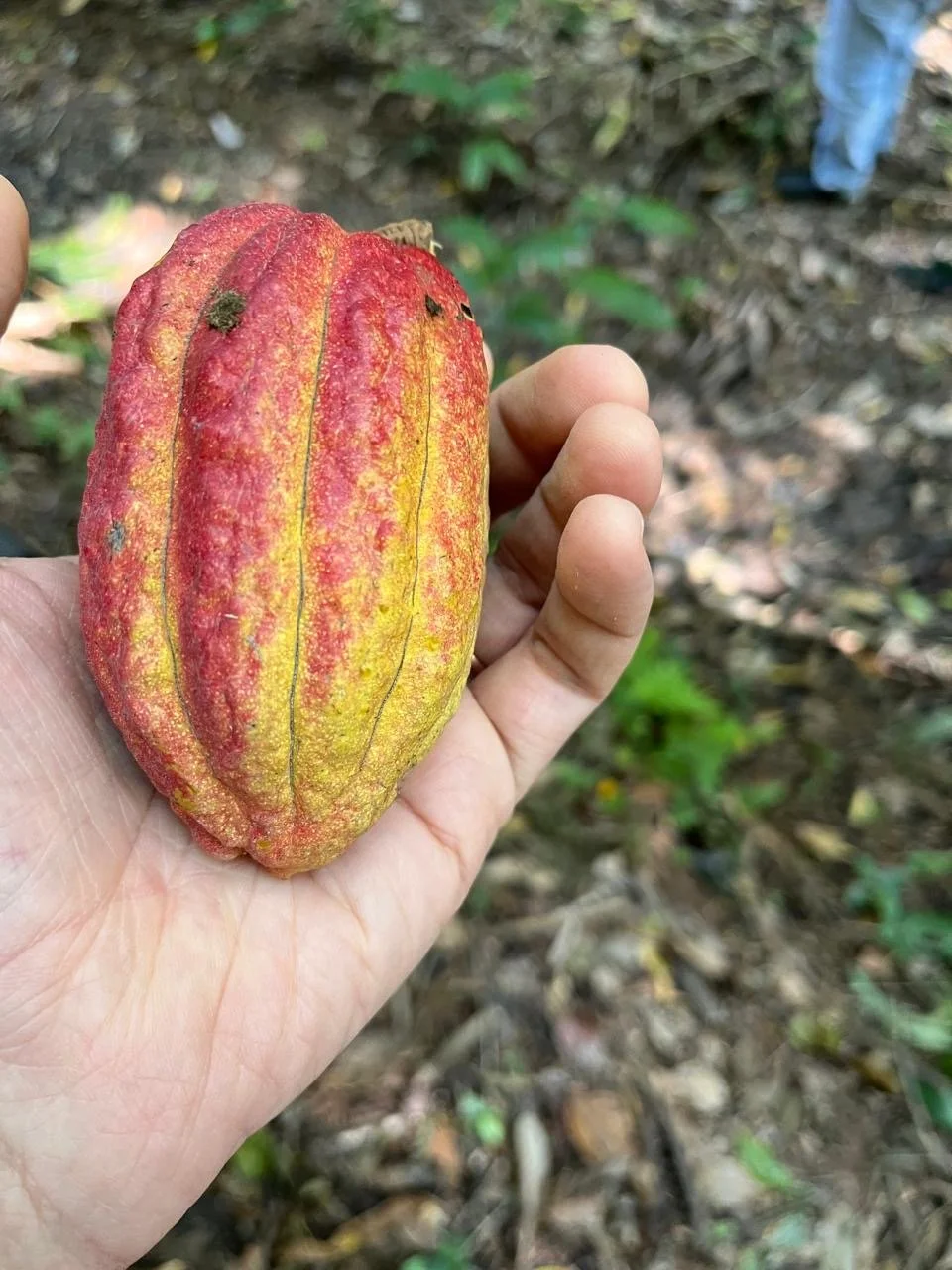
I’m very interested in our wild cacao. Belize was home to ancient American civilizations, including the Mayans. The Mayans valued many crops, such as corn and squash, but one that was incredibly important was cacao, the source of chocolate. They used cacao for drinks and even as currency. Most people don't realize cacao is not native to Belize; it originates in South America. It was brought here some 5,000 years ago because people valued it so much that they carried it all the way up through Central America and into Belize.
Belizean cacao species were refined over generations as they moved across this geographic and temporal expanse, being selected for flavor all along the way. Because of this history, the cacao here is unique to this area, and it’s often referred to as a relic of Mayan culture. But today, despite having a fine flavor and being this really cool cultural entity, our relic cacaos are being threatened. This is because 1) they only exist in forests that have not been explored or surveyed since the time of those ancient civilizations, and 2) imported modern hybrid cacao varieties are cross-pollinating their genetic stock with the relic species and eating away at conservation areas. I recently heard a story about an entire stand of relic cacao being discovered and destroyed simultaneously by slash-and-burn agriculture.
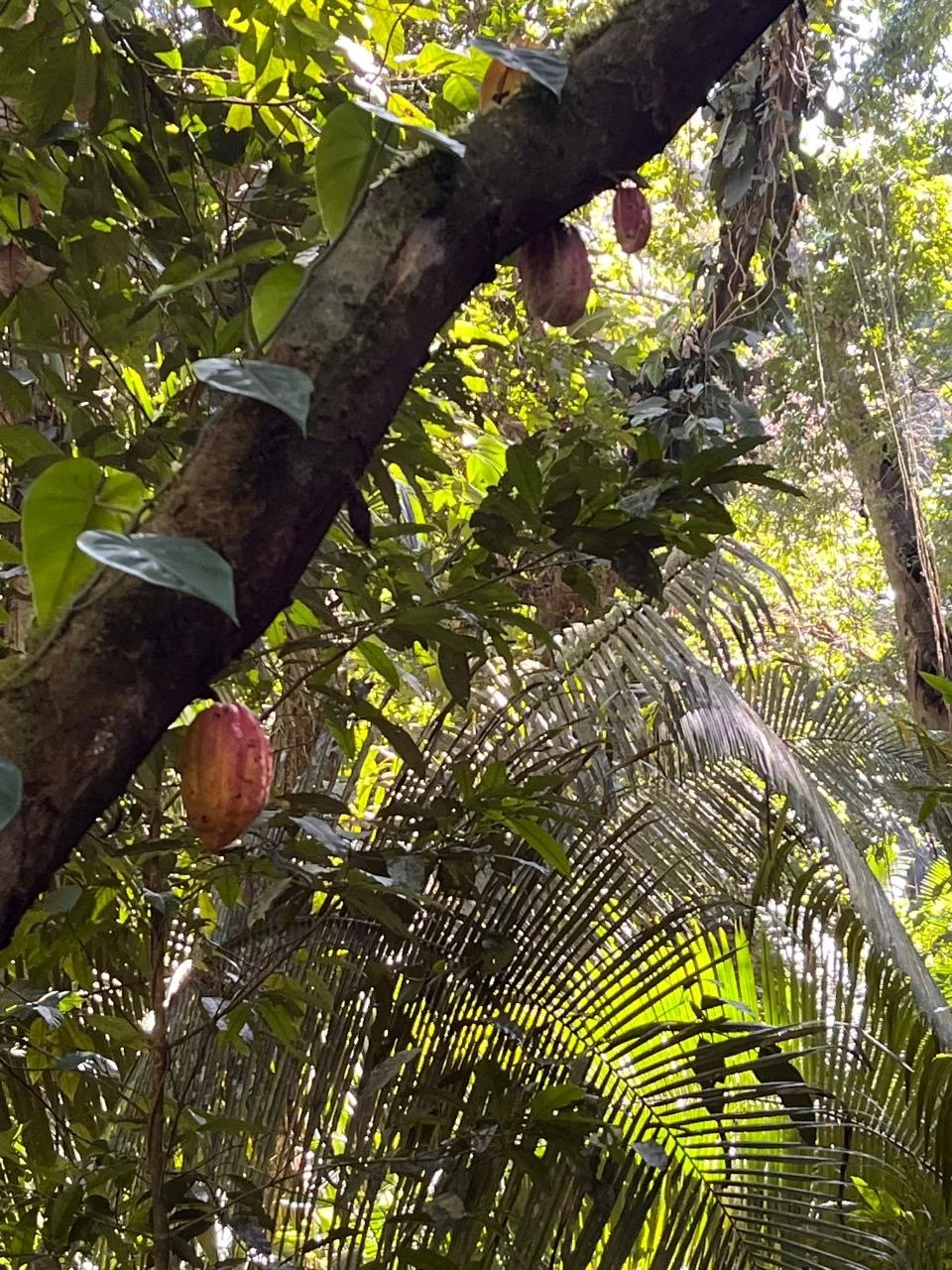
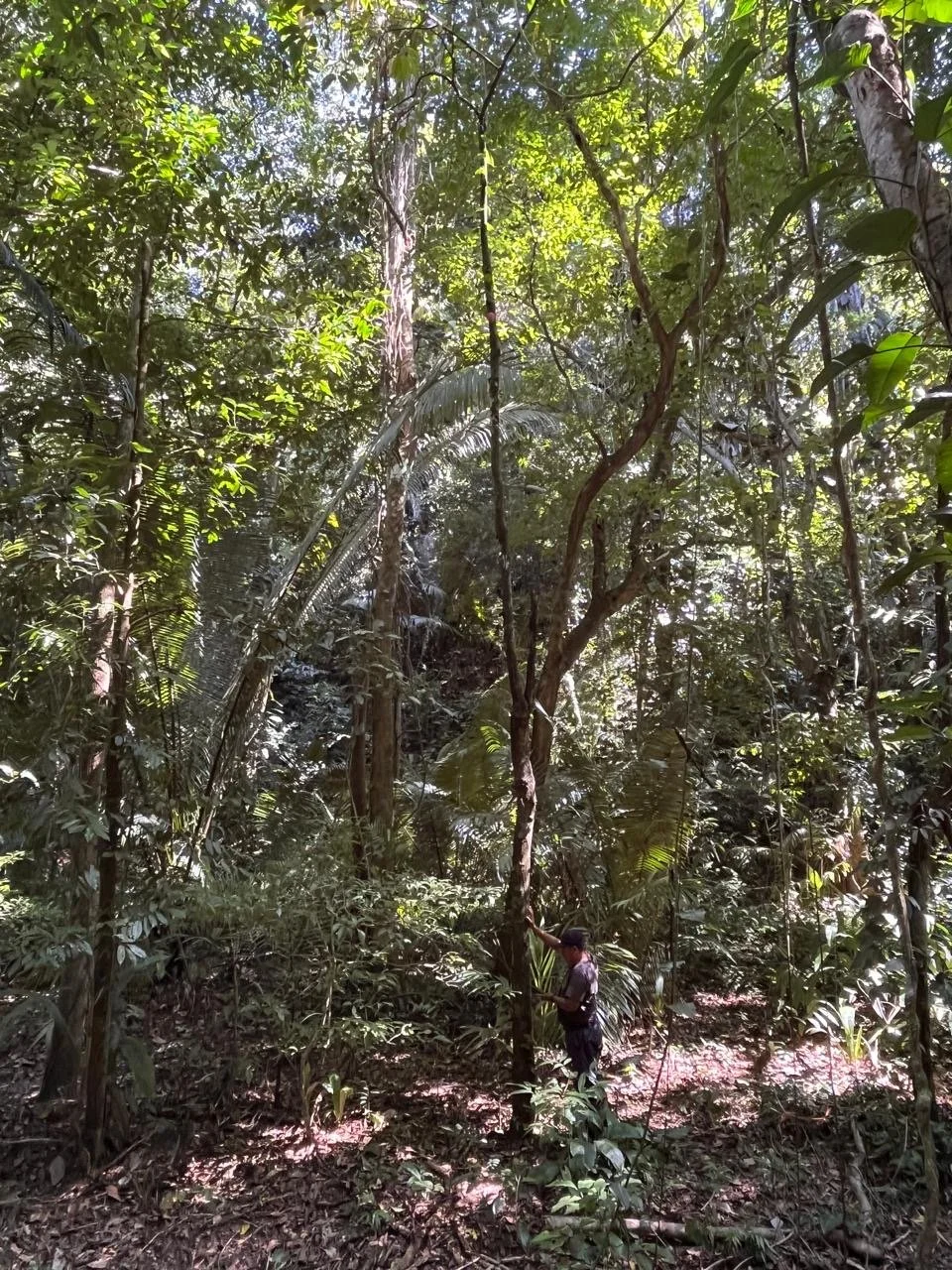
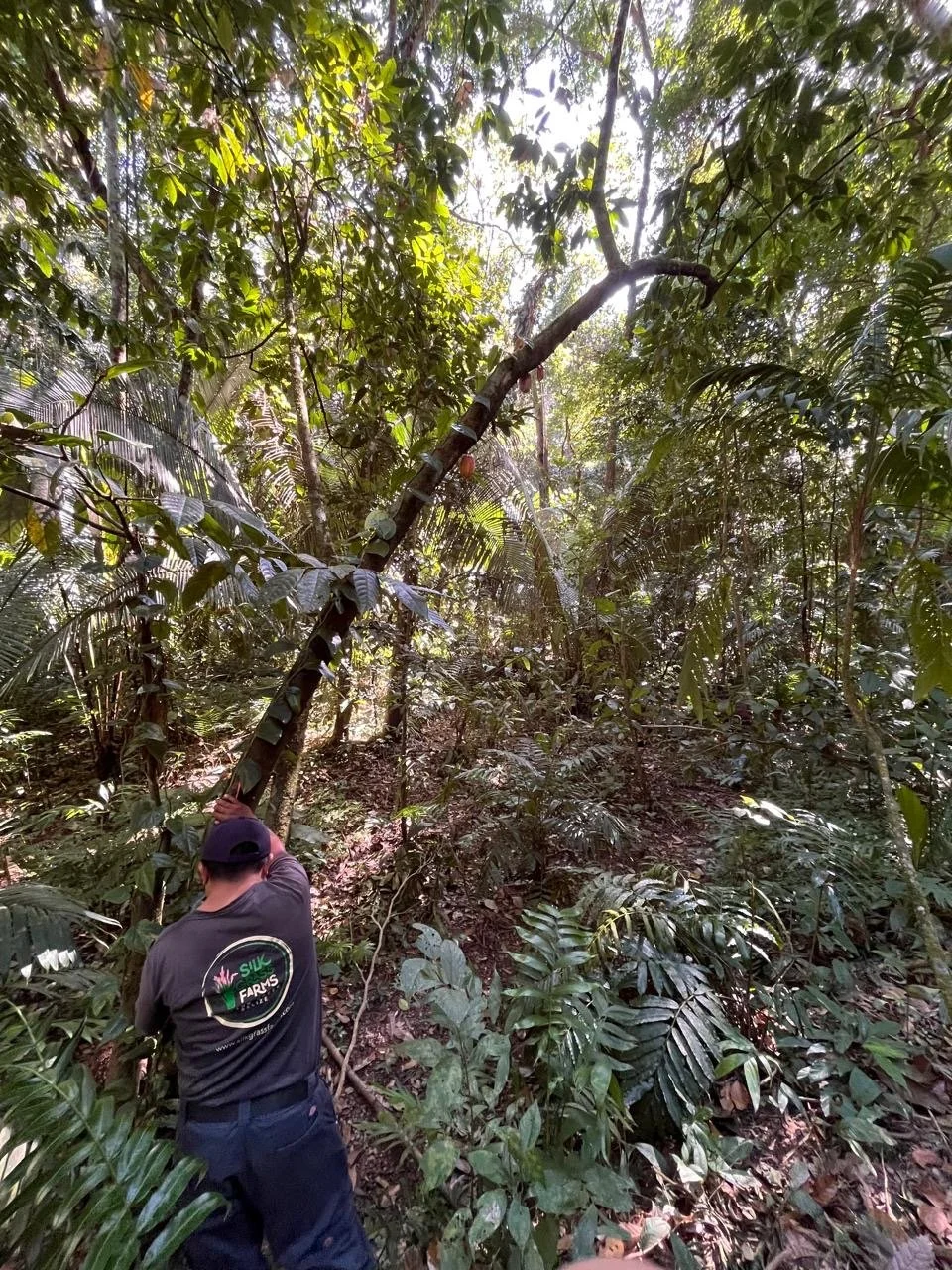
Our project will be to systematically survey our Reserve for these relic cacaos (see photos of what we’ve found below). Then we plan to collaborate with the international institute CIRAD in France to genotype each cacao tree species. Once we’ve established their genetic identities, we will bring them into what we're calling long-term plots, or conservation gardens, to protect their genetics and monitor the best ways to grow them. Finally, we hope to further our partnership with French chocolatier Valrhona to provide a sensorial assessment of these cacaos.
You are also launching research projects with key partners. Can you share some details about those?
Silk Grass has had a long relationship with the Stroud Water Research Center, which is world-renowned for its research into watershed quality, conservation, and restoration. For the last few years, Stroud has periodically visited Silk Grass to assess the health of the watersheds in the Reserve, measuring macroinvertebrate and microbial populations. What's really cool is that they’re integrating the Nature Reserve and the Farms so we can better understand what we need to protect and how farming activities are affecting watershed health. How are we impacting watershed diversity? Does that answer change when we go way downstream beyond our agricultural area, meaning we are affecting people on the other side of our farm? And if anything we are doing is harming watershed health, how can we mitigate it? This work will inform and strengthen our ecological stewardship.
Another exciting project is happening through our partnership with the National Audubon Society, focusing on the impact of farming practices on migratory birds. Silk Grass Farms will become the first of what Audubon calls a “lighthouse farm” — over time, we hope to expand the model across Central America. We will explore questions such as: Do migratory birds spend more time in areas that implement bird-friendly practices, such as agroforestry or shade trees, than in areas that do not? Do they find a place of refuge on our farms, or do they avoid them because they're not suited in some way to spending a period of time? Through this research, Audubon and other stakeholders will be able to evaluate how farming practices influence bird population health.
Additionally, Dr. Amy Thompson from the University of Texas at Austin will be visiting to ‘ground truth’ areas of interest identified in a LiDAR survey to determine whether there are any true indications of archaeological interest. The LiDAR survey, conducted in 2025, involved flying a fixed-wing drone over select areas of the Farms and Reserve. LiDAR allows us to see geographical features hidden under the canopy. The survey returned a large number of ‘areas of interest’ that may or may not be sites of ancient human activity. Remarkably, several ‘areas of interest’ show up close to where we have identified relic cacao trees. Perhaps these observations are related — and this is definitely a research partnership we will be sharing more about in the future as we learn more.
We also have several smaller partner projects underway, such as our ongoing relationship with Panthera, which has installed cameras across the property to monitor the health and population dynamics of our jaguar communities.
You’ve talked about how the Farm benefits the Reserve. How will your research on the Reserve benefit the Farms?
Many of the projects I'm developing have the Farms in mind because I want to support the synergistic relationship between the Farms and the Reserve. For example, the long-term plots in the cacao project I mentioned are research that will happen on the Farms. We plan to set up plots using nine different agricultural models, ranging from conventional to organic and regenerative approaches. This will be a first-of-its-kind, long-term research project to assess the effects of growing styles on biodiversity below and above ground. All of this data can then inform our farm practices and, hopefully, provide scientific evidence for the value of sustainable agriculture practices.