
Building a Framework for Lasting Impact: A Q&A with Silk Grass Farms Executive Director Alex Gallagher
Silk Grass Farms is thrilled to welcome Alex Gallagher as our new Executive Director. Alex has decades of experience in global food and agriculture, most recently serving as CEO of Prolan Sac/La Calera Agricultural, a top citrus and fruit exporter in Peru, and on the board of directors of Procitrus, Peru’s national citrus growers’ group.
We are excited to benefit from Alex’s expertise and vision as we continue to expand our work at Silk Grass Farms. With experience running a large-scale, family-owned business and a dedication to Silk Grass Farms' mission, Alex is passionate about channeling the momentum of our early growth into the systems and structure that will carry Silk Grass Farms forward for generations.
“If more companies and investors used their money to replicate this model, it would make a huge difference in the world,” Alex says.
In this Q&A, Alex shares what drew him to his new role at Silk Grass Farms, his passion for the farm’s mission, and some of his early goals for the organization.
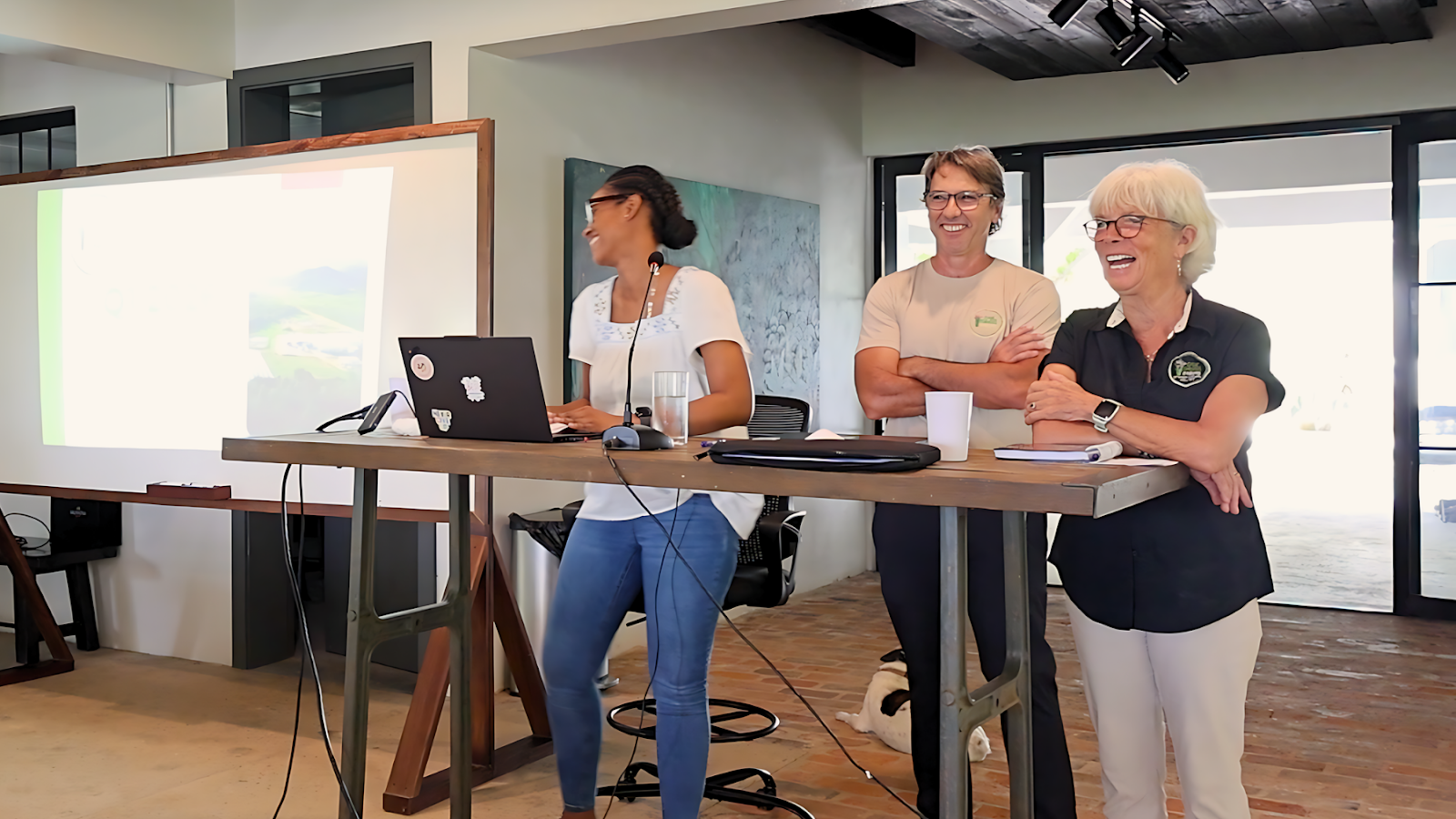
Silk Grass Farms Executive Director Alex Gallagher (center) leads a quarterly employee meeting at the Farms.
What drew you to this role at Silk Grass Farms?
A combination of variables aligned to bring me here, but the main attraction for me is the vision the Silk Grass Farms founders and team have for the company.
I worked for many years in a similar family-owned agricultural exports company, and I wanted to do something new but related. When I learned about Silk Grass and what motivates this business, I jumped on the opportunity because I know of very few companies that are run this way—the values, the motivation, the reason for being. It's very different from a profit-only-driven organization.
As I learned more about the company, I understood that they needed someone with industry experience. They have this beautiful land. They have amazing people. They have world-class machinery. My role is to execute the company's vision while ensuring long-term, sustainable profitability.
A major part of Silk Grass Farms’ mission is to benefit Belize. As a person who moved to Belize from Peru for this role, why is that important to you?
Making a difference anywhere in the world is important. Belize is a small country, so a company like this can make a significant difference here. For me, making an impact in Belize means making an impact in the world.
In addition, the model of a business working in a circular relationship with a nonprofit is unique. If more companies and investors used their money to replicate this model, it would make a huge difference worldwide.
The first step toward promoting that is proving this concept can work. If this company fails, it could become a proof point for everybody who is 100% profit-driven to say that a mission-driven business doesn't work. So I'm invested in this work for the people who work at Silk Grass Farms and their families, for Belize, for the world, and to be a model for anyone who seeks to emulate this business structure.
What experience from your career are you looking forward to bringing to Silk Grass Farms?
One thing that stands out is my experience working with a family-owned business. Family-owned businesses run differently from corporate businesses. In a family-owned business, you must balance the owners' vision with the requirements for profitability. It's critical to get that balance right, especially in a company like Silk Grass that is so driven by vision and impact.
The vision is at the heart of the work and drives its success, but if it is not balanced with the right systems to ensure profitability, it can put the company and its impact at risk.
What are some of your short-term goals as you begin your work in this role?
One of my first goals is to build a data structure across the company. I know from experience that if you make choices without accurate information, you tend to make the wrong ones. We must build out the data framework to measure what we’re trying to do and whether it’s succeeding. So far, Silk Grass Farms has been growing and growing. That is exciting, and so many successes have been achieved. Now we need the data to direct us on how to best invest our resources as we continue to grow.
Another goal is to “right-size” the company, ensuring we have the right people in the right seats. Belize is a small country — we want to hire its best people and empower them to do their best work. So far, the company has grown thanks to many smart, passionate people doing whatever it took to get the job done. To ensure the sustainability of our team going forward, we need a framework that defines who should do what, when, and why.
How does the Nature Reserve side of the enterprise influence your thinking about the business side?
The Reserve is core to the whole company. The vision is for the agricultural export business to support the Reserve. It's so intertwined, not only in the vision, but in what we need to communicate to the public. We have a great story to tell. At the farm, we are engaging in regenerative agriculture, creating quality jobs, producing premium products, and doing many other wonderful things, but when people partner with and purchase from Silk Grass Farms, the biggest impact they have is protecting this pristine, critical Nature Reserve.
What's your vision for Silk Grass Farms three years from now?
Part of our work toward business sustainability will always center on driving sales through strategic partners seeking high-quality suppliers of the products we produce. One great example is our partnership with Valrhona, a premier French chocolate company. We will always be focused on developing relationships with companies that value the impact and quality of what we are producing here.
But that is just one part of my larger vision to create the frameworks that will support long-term sustainability. This vision goes beyond sales — it incorporates all of our efforts, all of our people, all of our crops, all of our capabilities in the factory. We have these amazing resources available to us — now our task is to organize those resources to ensure the impact and legacy of this place for the future. This is an exciting moment. All of the progress made so far has positioned us to secure a foundation of success for years and decades to come.